The Invisible Moment Before the Click: How Brands Win Customers Before They Visit a Website
Consumer psychology · Brand perception · Conversion strategy
Most marketers obsess over what happens after someone lands on a website. We tweak headlines, test button colors, and shave seconds off load times. All of that matters.
But here’s the uncomfortable truth: for many visitors, the decision is already half-made before the page loads.
Think about the last time you bought something from a brand you’d never used. Chances are you didn’t arrive as a blank slate. You’d seen their posts, heard a friend mention them, or recognized their look. By the time you clicked, you weren’t evaluating. You were confirming.
This post is about that invisible moment before the click and how to win it.
The Click Is the Last Step, Not the First
We tend to treat the website visit as the start of the customer journey. It’s really closer to the final scene.
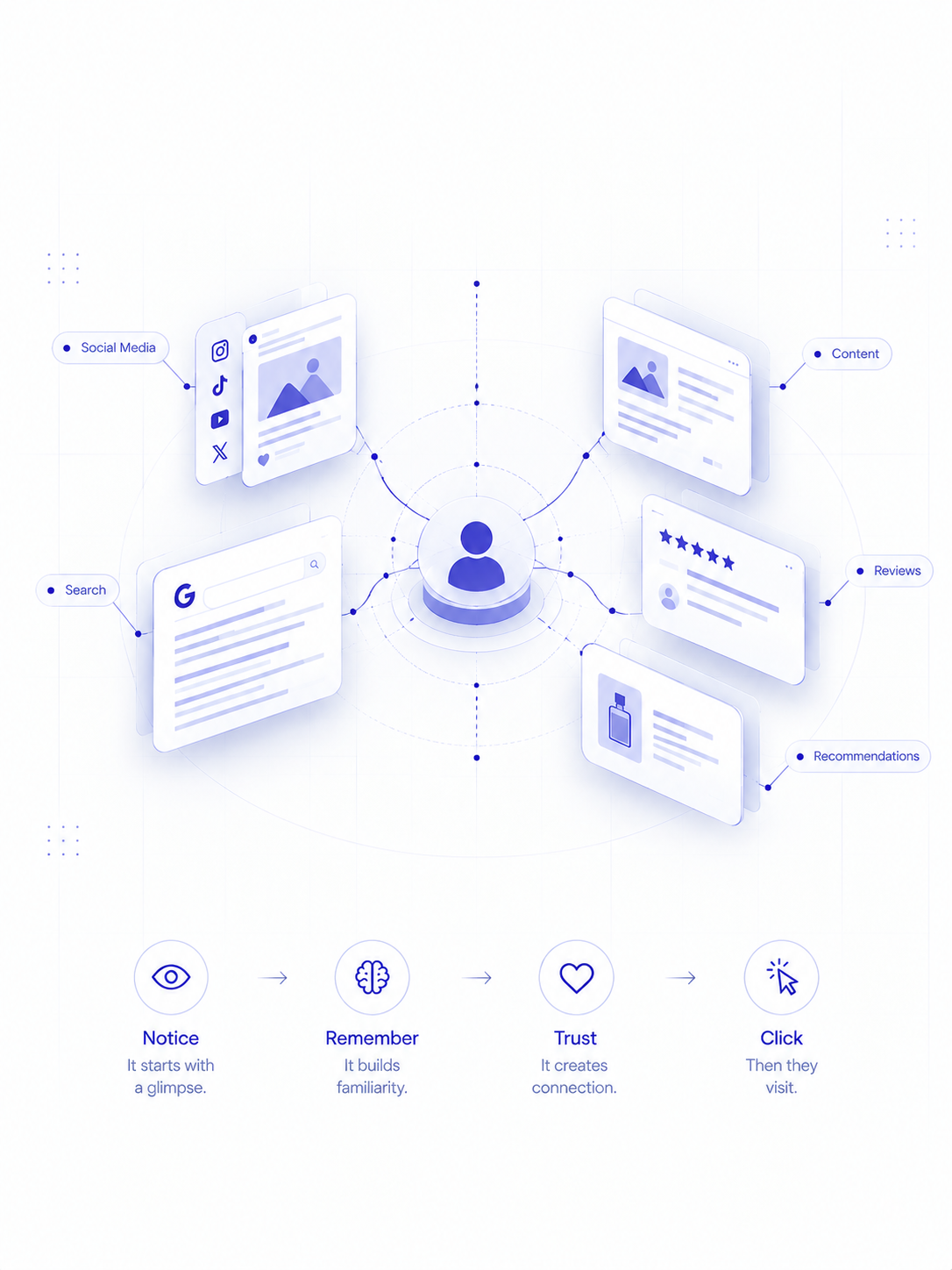
Before anyone types your URL or taps your ad, they’ve already formed a quiet impression of you. That impression comes from small, scattered signals: a post that stopped their scroll, a comment from a stranger, a logo they’ve seen three times without thinking about it.
Your website then plays one of two roles:
- Confirmation: “Yes, this matches what I expected. I’m in the right place.”
- Contradiction: “This doesn’t feel like what I saw before. Something’s off.”
When the pre-click impression is strong, your site has an easy job. When it’s weak or missing, even a beautifully designed page has to fight for trust from zero.
What Shapes a Decision Before the Visit
Let’s break down the main influences, because each one is something you can actually work on.
1. Previous Experiences
People carry their history with them. If someone has had a good experience with a similar brand, they arrive more open. If they’ve been burned by a competitor, they arrive guarded, and you pay for that even though you did nothing wrong.
Past experiences also include their experience with you. A fast reply to a question, a smooth checkout, or a helpful support chat all shape how they feel the next time your name comes up.
What to do: Treat every small interaction as marketing. A friendly reply to a comment is a pre-click investment.
2. Recommendations
A recommendation from someone we know carries weight that no ad can match. It works because the trust is borrowed. The person recommending you has already done the risky part of trying you, and the listener inherits their confidence.
This includes quieter forms of recommendation too: reviews, testimonials, and someone tagging your brand in a post.
What to do: Make it easy to be recommended. Ask happy customers for reviews, share their stories (with permission), and create experiences worth talking about.
3. Social Content
Social media is often where first impressions happen. Someone may follow you for weeks without ever visiting your site. During that time, they’re quietly answering questions like:
- Does this brand know what it’s talking about?
- Do real people engage with them?
- Do they seem trustworthy, or just loud?
Consistent, useful content builds a sense of “I know these people.” That feeling is powerful, because people are far more comfortable buying from brands that feel familiar.
What to do: Share things that help, not just things that sell. Teach something, show your process, and answer common questions. Over time, that earns you the right to be considered.
4. Visual Identity
Your visual identity is a shortcut to recognition. Colors, fonts, layout style, and image tone all work together as a kind of silent signature. When they stay consistent, people begin to recognize you in a split second, even in a crowded feed.
Consistency also signals reliability. A brand that looks pulled together across platforms feels like a brand that runs things well. A brand that looks different everywhere feels uncertain, and uncertainty makes people hesitate.
What to do: Create simple brand guidelines and stick to them. Your social profiles, ads, emails, and website should feel like they belong to the same family.
5. Familiarity
This one ties everything together. People tend to feel more comfortable with things they’ve encountered before. You don’t need someone to love your brand on first sight. You just need them to see it often enough, in enough good contexts, that it stops feeling like a stranger.
Familiarity lowers the mental effort of deciding. When two options seem equal, the familiar one often feels safer, and safe feels like a smart choice.
What to do: Show up consistently. Frequency and consistency matter more than a single viral moment.
Why This Matters for Conversions
Here’s where it gets practical. If you only optimize the website, you’re improving the last 10 yards of a long race.
When pre-click impressions are strong, you tend to see:
- Warmer visitors who already understand who you are
- Less friction, since they don’t need as much convincing
- Better-fit leads, because they arrived knowing what to expect
- Easier retargeting, because people recognize you when they see you again
When pre-click impressions are weak, you end up paying more to explain yourself to people who still aren’t sure about you.
In short, brand perception and conversion strategy aren’t separate departments. They’re the same conversation happening at two different moments.
A Simple Pre-Click Audit You Can Try Today
You don’t need a big budget to start. Try this quick exercise:
- Search your own brand name. What shows up? Is it what you’d want a stranger to see?
- Read your reviews and comments. What themes keep appearing, good or bad?
- Scroll your social profiles as a first-time visitor. Would you trust this account?
- Compare your visuals across platforms. Do they feel consistent?
- Ask three recent customers how they first heard of you and what made them click.
The answers will show you where the invisible moment is working for you and where it’s quietly working against you.
Common Mistakes to Avoid
- Treating social media as only a sales channel. If every post is a pitch, familiarity turns into fatigue.
- Ignoring negative feedback. A visible, unanswered complaint can undo a lot of good work.
- Changing your look too often. Constant rebranding resets recognition each time.
- Overpromising before the click. If your ad promises one thing and your site delivers another, trust breaks fast.
Measuring only last-click results. If you credit only the final touchpoint, you’ll underinvest in everything that made the click possible.
Conclusion
The website visit is not where the relationship begins. It’s where an existing impression either gets confirmed or challenged.
Brands that win consistently aren’t only the ones with the sharpest landing pages. They’re the ones people already feel good about before they arrive: through good experiences, trusted recommendations, helpful content, a recognizable look, and steady presence over time.
So the next time you review your funnel, look one step earlier. Ask not just “How do we convert visitors?” but “What did they already believe about us when they showed up?”
Start with one small change this week. Audit your brand’s first impression, then fix the biggest gap. Your future visitors will feel the difference before they ever click.
Over to you: What’s one touchpoint that made you trust a brand before you ever visited their website? Share it in the comments. I’d love to hear it.